
More retailers paint a picture
The popular Australian economic narrative includes the argument the consumer is weak, and we are heading towards a recession.
But Australia’s latest retail earnings results are painting a more nuanced picture. In other words, the household sector is under pressure, but the pressure is not falling evenly.
Spending on essentials remains resilient, value-conscious consumers are still buying when the offer is compelling, and well-run retailers are protecting profit through better gross margins, lower costs and tighter capital discipline.
At the same time, however, the more discretionary categories continue to show weak traffic and softer like-for-like sales.
Woolworths
Woolworths is the clearest recent example of ‘defensive.’
Woolies’s Australian Food Earnings Before Interest and Taxes (EBIT) rose 8.5 per cent to $2.95 billion in FY26, ahead of expectations, while gross margin was essentially flat and costs as a percentage of sales fell. Meanwhile, fourth-quarter like-for-like sales rose 4.7 per cent, and the first eight weeks of FY27 were even stronger, with Australian Food sales up 7.6 per cent.
The company also generated stronger-than-expected cash flow and finished with lower net debt than analysts had forecast.
That strength, however, should not be read as proof that Australian consumers are suddenly flush with cash. Groceries are non-discretionary, and a stronger supermarket result can coexist quite comfortably with weakness elsewhere. Indeed, Woolworths’ own numbers make the point. Big W produced a much better EBIT outcome than expected, but fourth-quarter like-for-like sales still fell 1.9 per cent and sales have continued to decline modestly into FY27. In other words, profitability improved more than demand did.
That’s a recurring theme in this results season: retailers are finding ways to make more money from subdued sales through cost control, range management and operational improvement.
There is also a caveat around Woolworths’ strong start to FY27. Management and analysts estimate its Ooshies collectibles promotion added roughly 1.5 to 2 percentage points to Australian Food growth. Strip that out, and the result is less spectacular. Even so, grocery demand appears solid, and the result is consistent with consumers prioritising essentials and perhaps eating more at home while remaining cautious elsewhere.
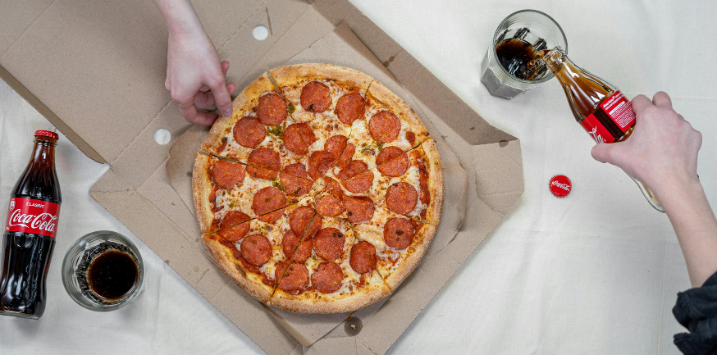
Pizza night
Domino’s Pizza Enterprises sits at the other end of the spectrum and offers a much less optimistic insight into discretionary spending.
The company’s group same-store sales fell 4.1 per cent in FY26, including declines of 4.7 per cent in ANZ, 2.2 per cent in Europe and 6.7 per cent in Asia.
More importantly, the weakness has continued: same-store sales were down 5.8 per cent in the first eight weeks of FY27, with management acknowledging that trading was below expectations.
The contrast with Woolworths is telling. Pizza is inexpensive relative to many restaurant meals, but it is still discretionary in a way supermarket food isn’t.
Domino’s is therefore more exposed to household decisions about whether to dine out, order in or cook at home. Its result suggests those decisions remain highly price-sensitive.
The company is responding with new products, pricing changes, a Coca-Cola partnership, marketing initiatives and substantial cost reduction. It has already actioned $67 million of annualised cost savings and is planning up to 60 further store closures, for an estimated $11 million annualised EBIT benefit.
Underlying Net Profit After Tax (NPAT), however, rose four per cent to $121.6 million, cash conversion improved, leverage fell materially to 1.86 times, and franchisee Earnings Before Interest, Taxes, Depreciation and Amortisation (EBITDA) increased. But the earnings performance is being supported by restructuring and efficiency while customer demand remains soft. That’s the important distinction. It reinforces the idea that Australian discretionary consumption has not yet normalised simply because inflation and interest-rate pressures have stabilised.
Koala
Koala, meanwhile, is the most interesting counterpoint. The online furniture and homewares retailer delivered FY26 pro-forma EBITDA 12 per cent ahead of expectations, driven by a group gross margin of 65.3 per cent versus guidance of 64 per cent. Contribution to profit from Australia was ahead of expectations; Japan performed particularly strongly; and the group ended the year with $71.2 million in net cash. Sales in the first eight weeks of FY27 then rose 20 per cent, or 27 per cent in constant currency.
On the surface, Koala appears to contradict the idea of a cautious consumer pulling back on purchasing big-ticket items. Furniture and homewares are highly discretionary and often linked to housing turnover, renovation activity and confidence.
Yet Koala is growing strongly. The explanation is probably less macroeconomic than company-specific – it’s coming off a small base, and beds are more ‘essential’ than couches and credenzas.
The company’s gross margin improvement, international expansion, and strong Japanese performance show how a differentiated product, a direct-to-consumer model, and successful execution can overcome a ‘boring’, even sluggish, category. The United States is also growing rapidly, although sales there were slightly below expectations and marketing costs were higher than forecast.
Reporting season suggests Australia is not experiencing a broad-based retail rebound. It is, however, experiencing a selective one. Essential spending remains robust; discretionary demand is patchy and value-conscious; and company execution matters more than ever.
Woolworths is benefiting from the resilience of groceries and better operating discipline. Domino’s is showing the strain in discretionary food spending and the need to repair economics through cost cuts and store rationalisation. Koala shows that strong brands and differentiated models can still grow through a soft environment.
Consumers are still spending, but they’re doing so selectively, and the winners are those businesses that can either sell something households have to buy, deliver obvious value, or execute well enough to take share from weaker competitors.

Roger Montgomery is the Founder and Chairman of Montgomery Investment Management. Roger has over three decades of experience in funds management and related activities, including equities analysis, equity and derivatives strategy, trading and stockbroking. Prior to establishing Montgomery, Roger held positions at Ord Minnett Jardine Fleming, BT (Australia) Limited and Merrill Lynch.
He is also author of best-selling investment guide-book for the stock market, Value.able – how to value the best stocks and buy them for less than they are worth.
Roger appears regularly on television and radio, and in the press, including ABC radio and TV, The Australian and Ausbiz. View upcoming media appearances.
This post was contributed by a representative of Montgomery Investment Management Pty Limited (AFSL No. 354564). The principal purpose of this post is to provide factual information and not provide financial product advice. Additionally, the information provided is not intended to provide any recommendation or opinion about any financial product. Any commentary and statements of opinion however may contain general advice only that is prepared without taking into account your personal objectives, financial circumstances or needs. Because of this, before acting on any of the information provided, you should always consider its appropriateness in light of your personal objectives, financial circumstances and needs and should consider seeking independent advice from a financial advisor if necessary before making any decisions. This post specifically excludes personal advice.


