

Are petrol retailers price fixing?
The Australian Competition and Consumer Commission (ACCC) needs to follow California’s lead and get on this!
I want to tell you about a product called Kalibrate Fuel Pricing. Kalibrate, the company that provides artificial intelligence (AI) driven fuel pricing and market analytics software, is owned by the private equity firm Hanover Bidco.
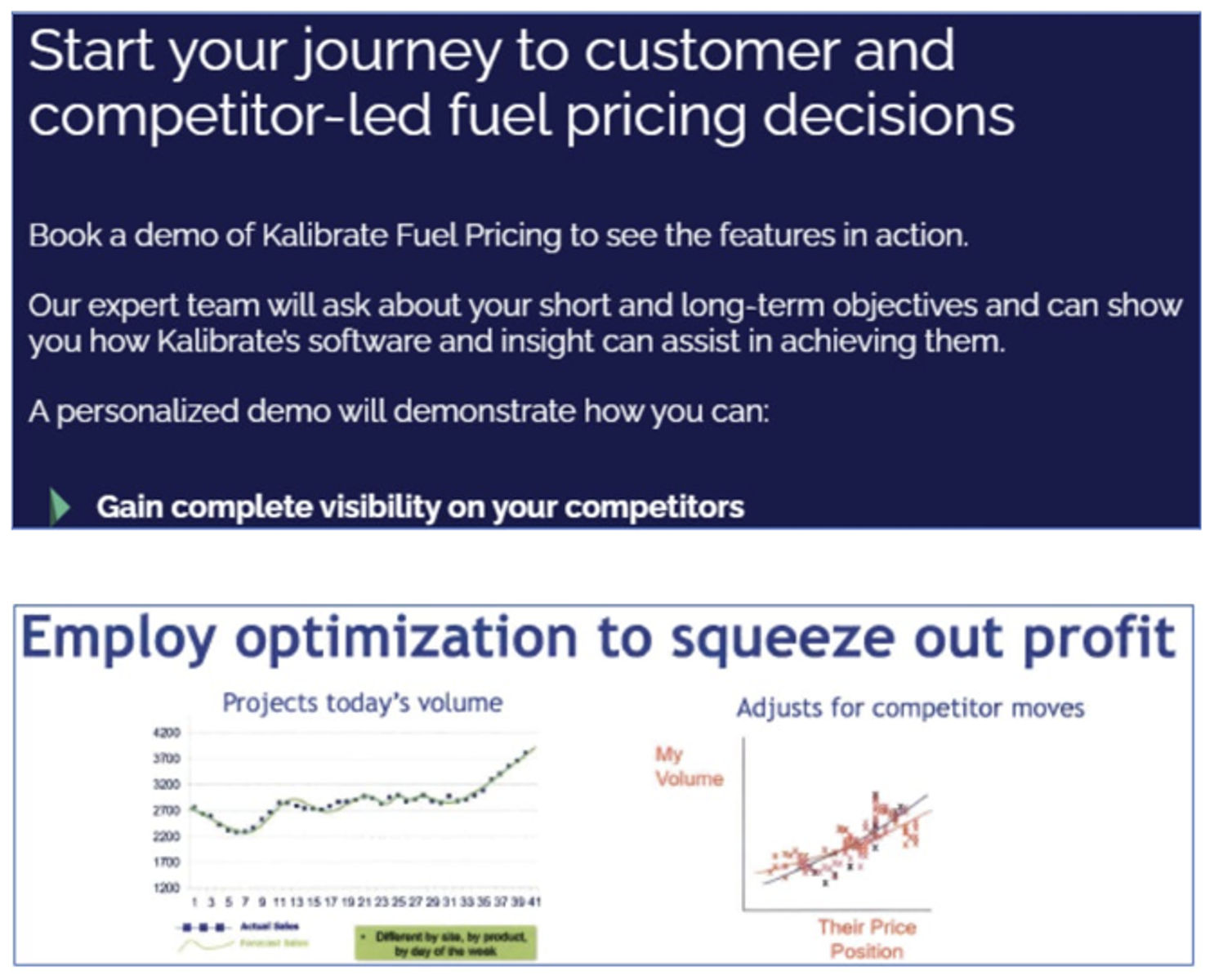
Kalibrate Fuel Pricing requests petrol station owners to provide sensitive, non-public data, including historical gas sale costs, volumes, forecasted costs, and margins. Using this private data alongside publicly available information, it offers pricing recommendations for petrol. Kalibrate describes this approach as “competitor-led fuel pricing decisions” and claims to provide “complete visibility on your competitors.”
That all sounds reasonable when thinking about an individual station using the service.
But here is where it gets interesting…
The software also enables Kalibrate to automatically update fuel prices across pumps, signage, and points of sale. Imagine most petrol stations in an area adopt Kalibrate’s automated pricing tool. That’s one entity deciding prices for everyone. That’s a monopoly and collusion at the same time.
Prior to installation of the software, petrol stations would set their prices independently. But after subscribing to Kalibrate’s automated pricing service, the service station owner hands pricing decisions over to what is effectively a cartel operator.
According to Kalibrate’s marketing material, about 90 per cent of Kalibrate’s pricing decisions are made automatically, leading to a “significant” boost in gross margins. Essentially, rather than a clandestine backroom cartel, this process is managed entirely by a third-party algorithm.
According to a Cstore news article published here “Kalibrate’s technology evaluates fuel pricing at gas stations and recommends optimal price points to balance margin and volume. Kalibrate can automatically push those price changes to pumps and retailers’ store signs. This can result in multiple direct competitors of Kalibrate’s retail customers using the algorithm and coordinating rather than competing on price.”
According to U.S.-based anti-monopoly campaigner Matt Stoller, the product is frighteningly effective.
“When a high percentage of stations in an area begin using this software, gas prices in aggregate go up by 30 cents a gallon. In Canada, the government found that Kalibrate software was lessening competition in retail fuel prices. In Germany, a large-scale study found that average retail station margins increased by 15 per cent after adopting this kind of software. Interestingly, where there was already monopoly control of a market, prices didn’t change much, but when there was vigorous competition, adoption of this software fostered significant price hikes. Basically, it tamps down on competition.”
And that sounds effectively like collusion.
Stoller also notes, “I went onto the Kalibrate website today, and it has likely been scrubbed of information that might suggest antitrust liability. Even so, the marketing content is about how the software helps decision-makers raise prices by knowing what competitors are doing. It has magic words like “protecting margin,” “optimization to squeeze out profit,” and “avoid triggering competitor price wars.” In one client scenario, Kalibrate bragged it was able to use its software to talk a customer out of lowering prices.”
Figure 1. Kalibrate marketing
Source: Kalibrate
Price-fixing technology has been around for a while in agriculture, property, and online platforms like Amazon, but it seems only now that consumers are waking up to the impact of unfair methods of competition.
In California, according to Stoller, Antitrust lawyer Lee Hepner, helped pass a new law last year in California, AB 325, ‘that law bars distributing “a common pricing algorithm as part of a contract, combination in the form of a trust, or conspiracy to restrain trade or commerce.” And it can be enforced, importantly, by private citizens, not just government officials,’ adding, ‘State Attorney General Rob Bonta, who helped win the antitrust case against Ticketmaster, testified for the law. “AB 325 simply makes it clear,” he said, “that using common pricing algorithms to fix prices among competitors is just as illegal as traditional price fixing methods under the [Cartwright] Act.”
In the California the law that bans price fixing technology is being enforced through class actions (private citizens) rather than government.
Just last week, 7-Eleven and Circle K were named in a lawsuit alleging they used AI to boost gas prices, with the complaint accusing several c-store retailers of engaging in price-fixing through Kalibrate’s fuel pricing technology.
Australia uses Kalibrate
Kalibrate Fuel Pricing is used in Australia. It is utilised by Australian fuel and convenience retailers of varying sizes to automate, strategise, and optimise their pump prices.
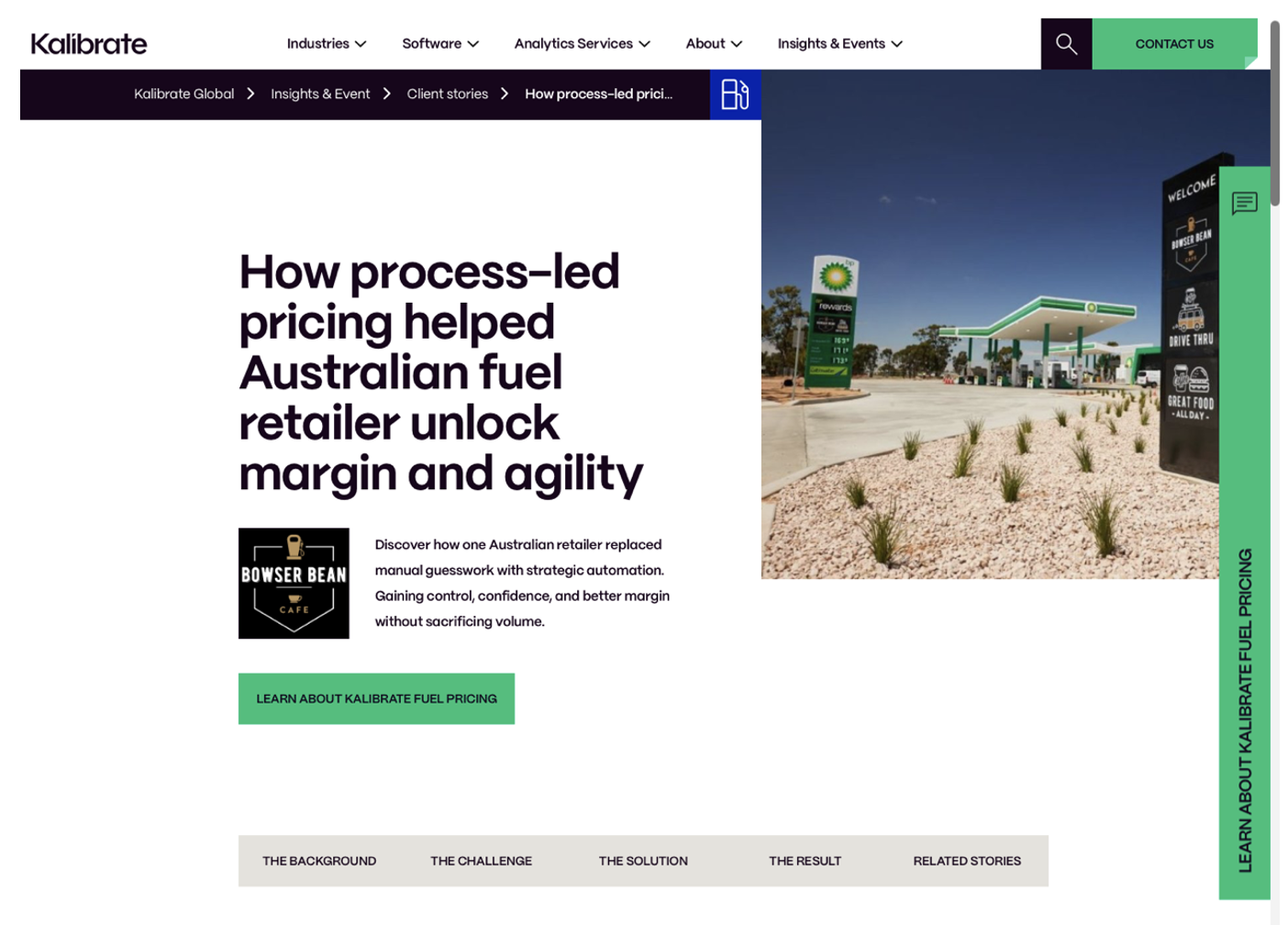
Kalibrate’s own website, with a picture of a BP outlet, declares, “How process-led pricing helped Australian fuel retailer unlock margin and agility…Discover how one Australian retailer replaced manual guesswork with strategic automation. Gaining control, confidence, and better margin without sacrificing volume.”
Figure 2. Kalibrate Webpage, 25 June 2026
Source: Kalibrate
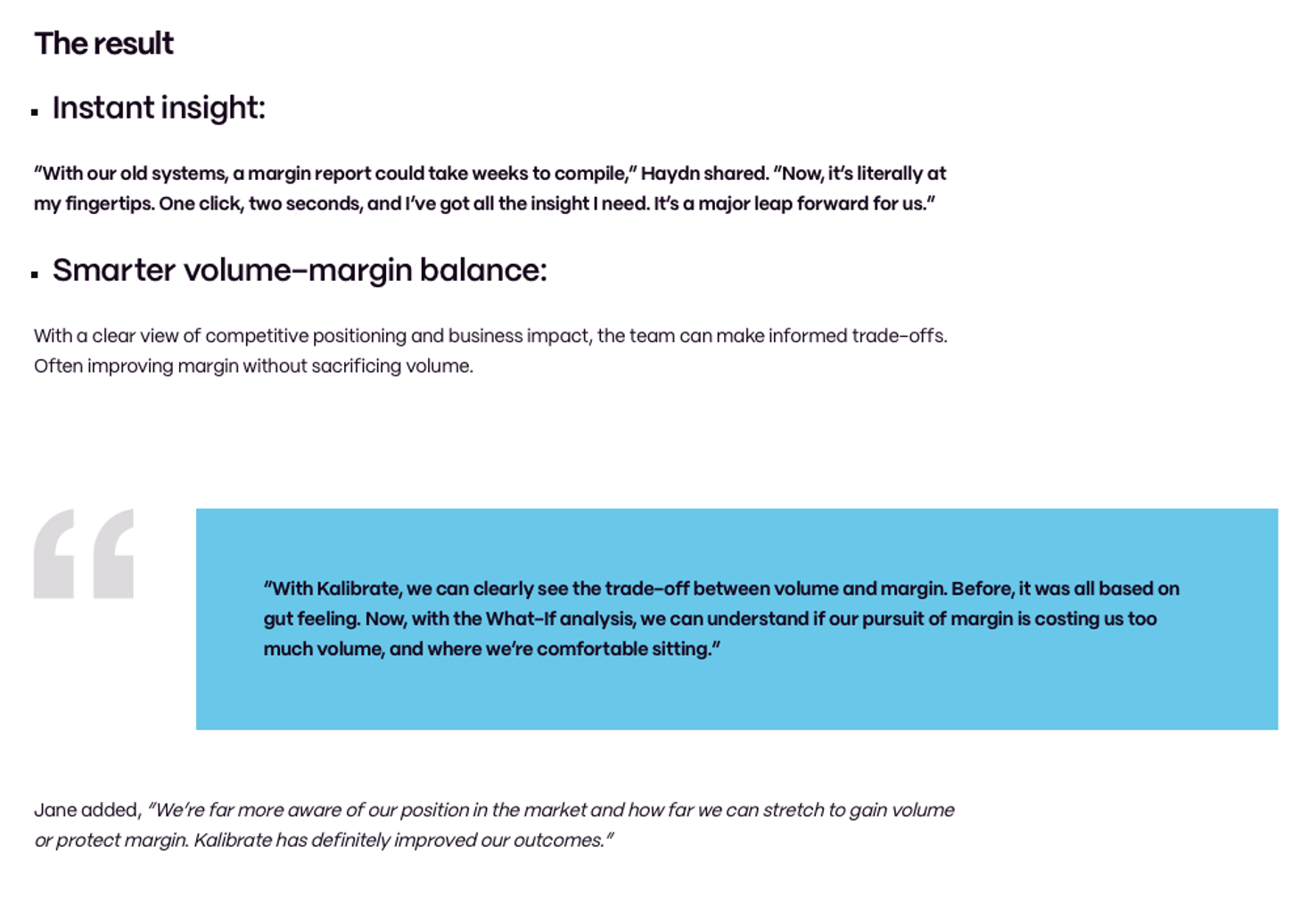
Figure 3. Kalibrate ‘Results’ Tab
Source: Kalibrate
According to the customer – presumably BP – “we’re far more aware of our position in the market and how far we can stretch to gain volume or protect margin. Kalibrate has definitely improved our outcomes.”
In the California class action lodged this week, BP is named as one of the defendants, as are 7-Eleven, Circle K, EG America – now known as Cumberland Farms, Marathon Petroleum, Walmart and Albertsons, as well as 10 unidentified gasoline fuel retail companies operating in the State of California.
Keeping in mind that Kalibrate will seek to grow its own revenue, one expects more than a single user of its software here in Australia. Indeed, the service station Point of Sale (POS) provider QuickFuel advertises on its website that its solutions integrate with Kalibrate.
“QuickFuel integrates seamlessly with Kalibrate’s advanced fuel retail solutions to enhance operational efficiency and strategic decision-making. Kalibrate provides invaluable insights into consumer behaviour, competitor activities, and market dynamics. By leveraging Kalibrate’s robust data analytics and location planning capabilities, QuickFuel Point of Sale POS systems uses its network strategy to maximise site profitability and enhance pricing strategies, staying ahead of competitors and driving sustainable growth.” QuickFuel.com.au
QuickFuel’s point of sale (POS) and forecourt solutions are used by both major brands and independent operators, including Liberty, Peral Energy, BP, Tasco Ampol, Shell and United.
One wonders whether Australian consumers are also being ripped off.

Roger Montgomery is the Founder and Chairman of Montgomery Investment Management. Roger has over three decades of experience in funds management and related activities, including equities analysis, equity and derivatives strategy, trading and stockbroking. Prior to establishing Montgomery, Roger held positions at Ord Minnett Jardine Fleming, BT (Australia) Limited and Merrill Lynch.
He is also author of best-selling investment guide-book for the stock market, Value.able – how to value the best stocks and buy them for less than they are worth.
Roger appears regularly on television and radio, and in the press, including ABC radio and TV, The Australian and Ausbiz. View upcoming media appearances.
This post was contributed by a representative of Montgomery Investment Management Pty Limited (AFSL No. 354564). The principal purpose of this post is to provide factual information and not provide financial product advice. Additionally, the information provided is not intended to provide any recommendation or opinion about any financial product. Any commentary and statements of opinion however may contain general advice only that is prepared without taking into account your personal objectives, financial circumstances or needs. Because of this, before acting on any of the information provided, you should always consider its appropriateness in light of your personal objectives, financial circumstances and needs and should consider seeking independent advice from a financial advisor if necessary before making any decisions. This post specifically excludes personal advice.


