• Right now, concentration is your portfolio’s biggest threat. Learn why here.

Global markets

  • Nasdaq Knock Out!

    Roger Montgomery
    April 11, 2014

    The Nasdaq fell more than 3 per cent overnight. What’s behind it? continue…

    by Roger Montgomery Posted in Global markets.
  • The beef with the Australia-Japan FTA

    Roger Montgomery
    April 8, 2014

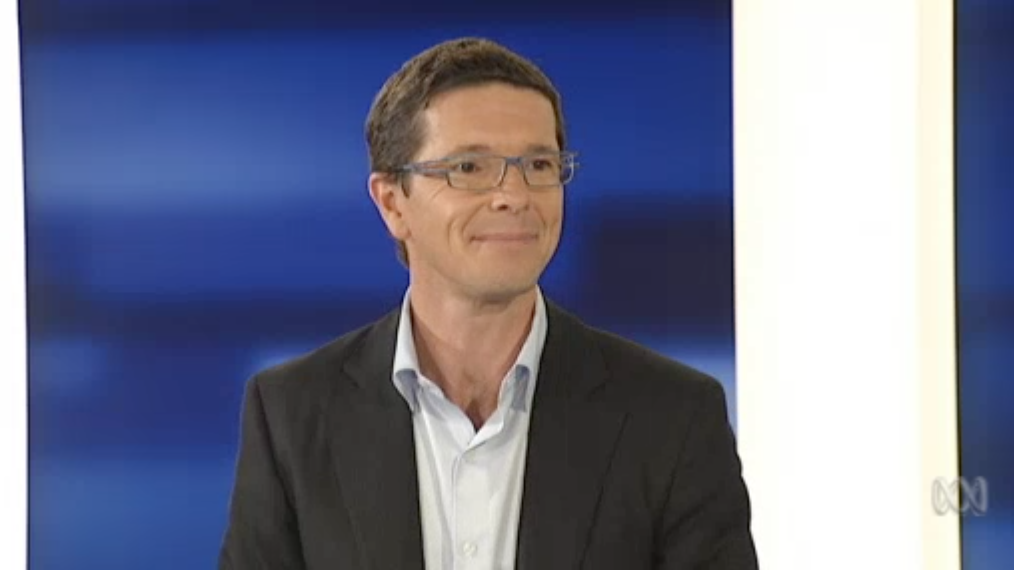
    In this interview with Ticky Fullerton on ABC’s The Business on 8 February 2014, I discuss the implications of the recent Australia-Japan Free Trade Agreement, and the moves that should have been made instead – starting with a comprehensive tax review. Watch here.


    by Roger Montgomery Posted in Global markets.
  • Will Ukraine’s Cold War heat up?

    David Buckland
    March 31, 2014

    Condemnation of Russia’s annexation of Crimea by Ukraine’s northern and western neighbours has been surprisingly quiet, and once again the US has been left to do the heavy lifting in terms of playing “global sheriff”. continue…

    by David Buckland Posted in Economics, Global markets.
  • Why China cannot have a ‘Lehman moment’

    Guest Author
    February 27, 2014

    By Derek Scissors, published in the South China Morning Post

    People are going to be discussing the flaws of Chinese finance for many years. Here’s a helpful guide: as soon as you see or hear “China’s Lehman moment” used seriously, stop paying attention. continue…

    by Guest Author Posted in Global markets.
  • The cold war in accounting oversight heats up

    David Buckland
    December 12, 2012

    Over the past decade many Chinese-based companies have listed in the US. For the larger stocks, such as PetroChina, China Mobile and CNOOC, the American Deposit Receipt (ADR) represents a secondary listing, and often Hong Kong is the primary place of listing.

    However for about 200 smaller stocks (with an aggregate market capitalisation of US$84 billion), the US is their primary market.

    continue…

    by David Buckland Posted in Financial Services, Global markets.
  • WHITEPAPER

    THE PROPERTY RUG PULL

    Discover how proposed changes to negative gearing, Capital Gains Tax and holiday home tax rules could reshape property investing, and why investors may consider private credit as property returns become less certain and tax advantages diminish.

    READ HERE
  • MEDIA

    Is the tide turning against ratings agencies?

    Roger Montgomery
    November 8, 2012

    The Federal Court’s decision against ratings agency Standard & Poors has significant implications for both the Australian and global markets – Roger provides insight into why this is so in discussion with Ticky Fullerton on ABC1’s The Business broadcast 6 November 2012, together with his insights into the latest RBA rates announcement. Watch here.

    by Roger Montgomery Posted in Global markets, TV Appearances.
  • Is the slowdown in China “priced in”?

    Roger Montgomery
    August 22, 2012

    In 2008, China implemented a massive economic stimulus program focused on fixed assets, with a concentration on construction. This program may have been necessary for stabilisation, but led to significantly increased capacity, particularly in China’s steel and cement industries. Annual capacity growth in recent years has been double or triple China’s economic growth.

    Australia’s material stocks were beneficiaries of strongly rising demand for coal and iron ore, and many were at or near record share price highs in the first half of 2011.

    Meanwhile the Shanghai Composite Index at 2100 is at the lowest level since the GFC lows of late-2008.

    The consensus view is for increased infrastructure spend from China over the foreseeable future to boost demand and prices. If correct, one might conclude that the slowdown is already “priced in”. However, we have been examining the interim results of Chinese cement, steel and shipbuilding companies. We are seeing severe earnings downgrades across the board: capacity is exceeding production, utilisation is declining, demand is restrained and inventory levels are rising. Excess steel production is being exported and many global steel and material companies are also seeing their earnings severely cut.

    While the Chinese command economy might continue building the odd ghost city or expressway into the Gobi Desert, the transformation from fixed asset investment to consumption is less steel intensive. Until the severe downgrade of the Chinese (and international) material stocks becomes consensus, Montgomery will continue to keep our powder dry in this area.

    by Roger Montgomery Posted in Global markets.
  • Germany v France and the future of your SMSF.

    Roger Montgomery
    May 29, 2012

    “The more European leaders talked at a dinner last Wednesday, the grimmer Angela Merkel looked. One after another, they spoke out in favor of the joint assumption of debt and against the strict austerity course Berlin is calling for. The chancellor stared silently at the man who was responsible for this change of mood — France’s new president, François Hollande, who noted with satisfaction that there was “an outlook for euro bonds in Europe.”

    Merkel disagreed, saying that euro bonds are not the right tool, but to no avail. Only a minority stood behind the German leader. Even European Council President Herman Van Rompuy said, at the end of the dinner, that there should be “no taboos,” and that he would examine the idea of euro bonds. “Herman,” Merkel blurted out, “you should at least say that some at this table are of a different opinion.”

    …..

    The fight has only just begun, and so it comes as no surprise that the roar of battle is drowning out everything else at the moment. But there are also signs of rapprochement. During his first official visit to Berlin, Pierre Moscovici, the new French minister of economics and finance, revealed some sympathy for the German line. He confirmed the new French government’s intention to reduce the national deficit in the coming year to below the upper limit of 3 percent of GDP, and to eliminate all new borrowing starting in 2017. He also underscored how important healthy budgets are for growth and employment. Those who have too much debt become impoverished, he said. And those who are poor, he added, cannot invest.”

    From:  http://www.spiegel.de/international/europe/merkel-preparing-to-strike-back-against-hollande-with-six-point-plan-a-835295.html

    I like Greg’s post on this subject here on the Insights Blog earlier today:

    “With respect to Eurobonds, investors should understand that what is really being proposed is a system where all European countries share the collective credit risk of European member countries, allowing each country to issue debt on that collective credit standing, but leaving the more fiscally responsible ones – Germany and a handful of other European states – actually obligated to make good on the debt.

    This is like 9 broke guys walking up to Warren Buffett and proposing that they all get together so each of them can issue “Warrenbonds.” About 90% of the group would agree on the wisdom of that idea, and Warren would be criticized as a “holdout” to the success of the plan. You’d have 9 guys issuing press releases on their “general agreement” about the concept, and in his weaker moments, Buffett might even offer to “study” the proposal. But Buffett would never agree unless he could impose spending austerity and nearly complete authority over the budgets of those 9 guys. None of them would be willing to give up that much sovereignty, so the idea would never get off the ground. Without major steps toward fiscal union involving a substantial loss of national sovereignty, the same is true for Eurobonds.”

    At worst your SMSF hangs in the balance.  At best expect a wild ride.

    Posted by Roger Montgomery, Value.able author, Skaffold Chairman and Fund Manager, 29 May 2012.

    by Roger Montgomery Posted in Global markets, Market Valuation.
  • Is Japan the Next Black Swan?

    Roger Montgomery
    May 22, 2012

    Forget Europe. That’s old news. The next surprise might just be a bursting of Japan’s bond bubble.  Nay, a bursting of Japan itself?

    According to Fitch, gross general government debt of Japan is likely to reach 239 percent of GDP by end-2012, the highest for any Fitch-rated sovereign. Moreover, Japan’s Fiscal Management Strategy envisages declines in the government debt/GDP ratio only from fiscal year 2021.

    Would you lend Japan money (or any country with these financials) at rates approaching zero?

    Strong private savings contribute to the country’s persistent current account surpluses. But that’s all going to change as ageing baby boomers (who the government has been borrowing money from at near zero rates – its called financial repression) start to ‘dissave’. As they get older they will stop saving and start needing the cash to finance retirement and healthcare. The result is that the government will need to turn to foreign investors for cash and they are not going to accept zero rates when the country has debt of 240% of GDP.

    According to Bloomberg: “How low can bond yields go without triggering a meltdown?

    “This question gains urgency as 10-year government yields disappear before the world’s eyes. At 0.83 percent, the lowest level since 2003, they hardly compensate investors for the risks inherent in buying IOUs from the most indebted nation. Public debt is more than twice the size of the $5.5 trillion economy. Worse, it’s still growing. Fitch Ratings today lowered the sovereign-credit rating by one step to A+ with a negative outlook because of Japan’s “leisurely” efforts to cut debt.

    “Ignore news that gross domestic product rose an annualized 4.1 percent from the final three months of 2011. The only reason Japan is growing at all is excessive borrowing and zero interest rates. The moment Japan trims its debt, growth plunges, deflation deepens and politicians will demand that the Bank of Japan do more. That’s been Japan’s lot for 20 years now.
    Yet what if the BOJ isn’t just setting Japan up for the mother of all crises, but holding the economy back?

    “A bizarre dynamic is dominating Japan’s financial system, one evidenced by two-year debt yields falling to about 0.095 percent. That is below the upper range of the BOJ’s zero-to-0.1 percent target for official borrowing costs. It’s below the 0.1 percent interest rate the BOJ pays banks for excess reserves held at the central bank. Such rates raise serious questions.

    “The BOJ does reverse auctions where it buys government debt from the market. Last week, it failed to get enough offers from bond dealers. Now think about that: The BOJ prints yen and uses it to buy government debt from banks, which typically hoard the stuff. Last week, banks essentially said: “No, thank you. We’d rather have these dismal interest-bearing securities than your cash, because there’s really nowhere to put that cash anyway.” Banks certainly aren’t lending.

    “Politicians are pounding the table demanding that the BOJ expand its asset-purchase program. That, of course, isn’t possible. The BOJ can hardly force banks to swap their bonds for cash. So Japan is left with a problem unique to modern finance. Banks like to keep more cash on deposit at the BOJ than they need to in order to earn a 0.1 percent rate of return, which is pretty good by Japan standards. To pay that rate, the BOJ creates new money, which does nothing to help the economy.

    “This dynamic keeps Japan’s monetary engine in neutral at best, and at times running in reverse. Japan’s central bank is essentially now there to support bond prices. It’s a huge intervention that gets little attention. Headlines roll every time the Ministry of Finance sells yen in currency markets. The BOJ’s debt manipulation barely registers.”

    Why today?

    Last year it was Iron Ore and recently it was minings services for which we suggested conventional wisdom should be questioned.  I am posting this topic today because Fitch Ratings lowered Japan’s credit ratings citing rising risks to the sovereign credit profile due to higher public debt ratios.

    The long-term foreign and local currency Issuer Default Ratings were lowered to ‘A+’ from ‘AA’ and ‘AA-‘ respectively. The Negative outlook on ratings was maintained.

    “The country’s fiscal consolidation plan looks leisurely relative even to other fiscally-challenged high-income countries, and implementation is subject to political risk,” Andrew Colquhoun, Head of Asia-Pacific Sovereigns at Fitch.

    The agency warned that a lack of new fiscal policy measures aimed at stabilizing public finances amid continued rises in government debt ratios could lead to a further downgrade.

    Posted by Roger Montgomery, Value.able author, Skaffold Chairman and Fund Manager, 22 May 2012.

    by Roger Montgomery Posted in Foreign Currency, Global markets, Market Valuation.
  • Confusion and misinformation…

    Roger Montgomery
    February 16, 2012

    I was surprised to read mainstream financial commentary today, suggesting today’s sell off reflected a “shrugging off” of a “solid” domestic labour report, and that instead, the market focused on disappointing earnings reports from large cap domestic companies and growing fears Greece is moving closer to default.  Putting aside the fact you’d go nuts trying to make sense of every zig and zag of the market, lets examine the influences todays market gyrations are being attributed to and come up with a better approach to investing.

    First regarding Greece:  They ARE BANKRUPT.  If a country needs $171 big ‘B’ billions in rescue funds, they are bankrupt.  The reports that suggest they will default in mid March “if” they don’t get the money means THEY DONT HAVE THE MONEY!  And generally, if you don’t have the money to make interest payments or pay out maturing loans, you call in the administrators, receivers of liquidators.

    Deputy RBA governor Guy Debelle told me this week that if you owe the bank $100 its your problem but if you owe them $100 billion, its the banks problem.  Not quite sure why this should give us any comfort – its a problem.  Suffice to say officialdom is sanguine about the risks in Europe and believe the worst is over thanks to the ECB’s unlimited cheap 5-year facility offer last year.

    Turning locally and I thought it worth thinking about that “robust” labour situation in Australia and mentioned above:  Jobs are being shed in manufacturing, financial services, banking, retailing and in Qantas’ing.  I am getting calls from analysts all over who are being made redundant and looking for work (and I can think of nothing better than taking them all on to create the an Equities Newsletter the likes of which this country has never seen.  Lets park that.  It beggars belief that anyone would suggest that employees on the east coast of Australia are content and secure.  And don’t forget that when one person loses their job, they commiserate with friends and they all stop spending “just in case” it happens to them too.

    Permabear Steve ‘Kosciusko’ Keen looked even deeper at this and particularly at the following quote from the RBA’s decision last week not to raise rates; “Information on the Australian economy continues to suggest growth close to trend… the unemployment rate increased slightly in mid year, though it has been steady over recent months…With growth expected to be close to trend and inflation close to target, the Board judged that the setting of monetary policy was appropriate for the moment.”

    But Steve noted:  the “steady over recent months” phenomenon that the RBA referred to above was entirely due to a fall in the participation rate. Had this remained at the November level, the ABS unemployment rate would have jumped to 5.6 per cent last month.

    “And that’s the good news: as was widely reported, employment fell by almost 30,000 last month, so that net job growth in 2011 was zero – the worst outcome in 20 years.

    Secondly, a broader measure of unemployment maintained by Roy Morgan Research hit 10.3 per cent – 5 per cent above the ABS figure. The ABS ludicrously treats someone who has worked for one hour in the previous two weeks or someone who has worked without pay in a family business as employed. The ABS also does not consider unemployed someone who is not actively looking for work even though they don’t have a job.  Steve notes; “surely if someone is not working, is looking for work and considers themselves to be unemployed, then they should be considered unemployed regardless of whether they happen to have done a couple of hours work here and there during the month?”
    Roy Morgan defines any respondent who is not employed full or part-time and who is looking for paid employment as being unemployed.  And as their chart shows, our anecdotal insight from all the headline-grabbing job shedding (what of all the non headline grabbing job losses?) has a better take on whats going on – unemployment is around 9% or 10%.
    Finally, the company results we are seeing are at worst, mixed.  While Qantas (SQR: B3) reported underlying profit before tax down 52 per cent, AMP (SQR: A3) reported an 11 per cent decline in net profit, QR National (SQR: A3) reported a 32 per cent drop in net profit to $189 million for the six months to December 31 and Goodman Fielder (SQR:C4) reported a 76.9 per cent drop in net profit, Brambles (SQR:C4) however reported a 9 per cent increase in its interim net profit and Wesfarmer’s (SQR: A2) Coles supermarkets profits rose 10.9 per cent and margins increased from 4.1 per cent to 4.3 per cent.  In the latter two cases however, analysts had higher expectations.  So even the ok results were ‘bad’.
    But there have been some really good results amid the carnage.  Dominoes (SQR: A2), The Reject Shop (SQR: B3), Credit Corp (SQR, A2), Webjet (SQR, A2) all had great results.
    If you are an investor, don’t be distracted by all the noise nor the commentary.  Sure conditions aren’t great, but you will pay a very high price if you wait for a cheery consensus and there are businesses that are kicking serious goals right now.  If you can pick them up cheap enough (and its quite possible the negativity may generate lower prices), let the markets nervousness produce opportunities for you.
    Seen any results that have impressed?  Know anyone who is laying off staff or anyone that is now looking for work?  Share your insights and experiences here.
    Posted by Roger Montgomery, Value.able and Skaffoldauthor and Fund Manager, 16 February 2012.

    by Roger Montgomery Posted in Global markets.