

Concrete before code – AI starts with physical infrastructure
The gigawatt IPOs
Ahead of a multi-billion-dollar Australian data centre Initial Public Offering (IPO), many local investors are taking a particular interest in the sector, swatting up on everything they can learn. Of particular interest are the latest developments at Datacentre hopeful Fermi America.
In the age of Agentic Artificial Intelligence (AI), building the world’s largest data centre sounds like a license to print money. But as Fermi America shareholders are currently discovering, even having the former U.S. Secretary of Energy as a co-founder and the Trump name on the door doesn’t make concrete pour any faster.
The recent news out of Amarillo, Texas, therefore, is a sobering reality check for the entire industry.
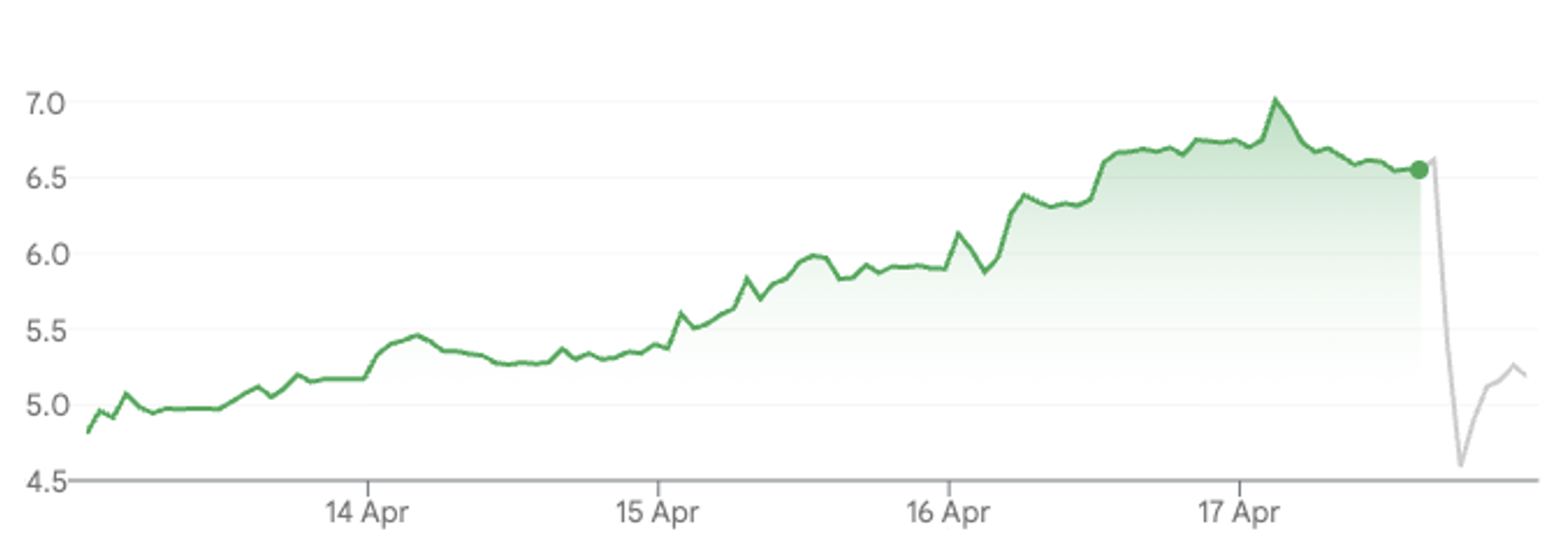
With CEO Toby Neugebauer abruptly departing on April 17 without explanation and shares plummeting by more than 30 per cent, the ambitious Project Matador (formerly the President Donald J. Trump Advanced Energy and Intelligence Campus) is quickly becoming something of a speed bump to investor enthusiasm.
By way of background, The New York Times and Politico have variously reported that Fermi benefited from the involvement of several current and former high-ranking Trump administration officials, including as co-founders, as promoters of the project, as relatives of the people earning fees for raising capital, and as negotiators to secure key equipment with sovereign nations.
While this American project’s political pedigree is unique, even it may not have been enough to avoid three universal pain points that every developer – including those like Firmus eyeing a 2026 IPO – will need to navigate successfully to survive.
The anchor tenant
In the data centre world, size is a liability until it’s subsidised. Fermi America pitched a massive 17 GW campus, but as their recent Securities and Exchange Commission (SEC) filings and a report from Cleanview suggest, they lack a confirmed anchor tenant.
For any project, you need an anchor, and at Fermi’s scale, you need a hyperscaler like Amazon, Google, or Meta to sign on to avoid building ‘on spec’. In other words, you can have the turbines and the land, but without a signed contract from a tech giant, you aren’t a data centre – you’re a very expensive shed.
Logistics
For passive investors, like you and me, it’s important to know there’s a massive gap between a ‘shovel-ready’ project and a ‘live’ one. Fermi claimed construction was “almost complete” in its first phase, yet satellite imagery from Cleanview tells a different story. Where competitors like Crusoe and Vantage appear to be working 24/7 to finish building shells, Firmi America’s site is a greenfield.
The infrastructure required for a gigawatt-scale site is staggering and includes, securing long-lead items like Siemens turbines (which required literal cabinet-level intervention for Fermi), navigating Clean Air Permits and local zoning, and finding 5,000+ site workers to keep the site active and the project progressing.
The IPO
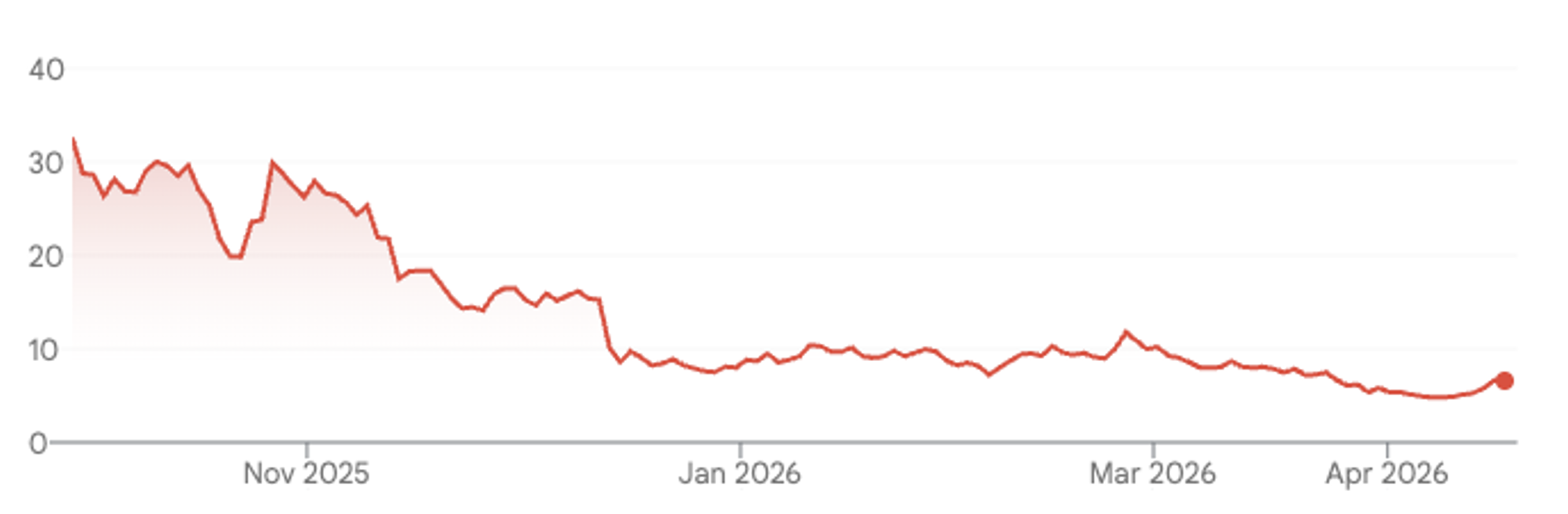
Fermi America raised US$746 million in its IPO last October on a promise of “speed and scale.” As Figure 1., and Figure 2., reveal, the reality has been quite different to that promised. And when that reality clashed with projections, the fallout has been painful, even amid the return of bull market for the AI thematic.
Figure 1. 5 day Fermi share price ($US as at 17 April 2026 ‘aftermarket’)
Source: Google finance
The experience serves as a useful warning for potential Firmus investors as that company prepares for its own public debut later this year.
The AI theme has moved from potential to production. Firmus will need to prove their supply chain is insulated from the delays hitting Fermi in Amarillo and that their own ‘phase one’ is backed by more than press releases.
Figure 2. 1 year Fermi share price ($US)
Source: Google finance
The bottom line – project or pitch?
The AI boom is real, but the physical infrastructure required to power it is subject to the old-fashioned laws of physics and finance. Even with massive political capital, Fermi has not been able to skip the boring stages of development, such as securing tenants, managing specialised labour, and being transparent with investors about realistic timelines.
The question to ask before investing is: Do you have a project, or just a pitch?

Roger Montgomery is the Founder and Chairman of Montgomery Investment Management. Roger has over three decades of experience in funds management and related activities, including equities analysis, equity and derivatives strategy, trading and stockbroking. Prior to establishing Montgomery, Roger held positions at Ord Minnett Jardine Fleming, BT (Australia) Limited and Merrill Lynch.
He is also author of best-selling investment guide-book for the stock market, Value.able – how to value the best stocks and buy them for less than they are worth.
Roger appears regularly on television and radio, and in the press, including ABC radio and TV, The Australian and Ausbiz. View upcoming media appearances.
This post was contributed by a representative of Montgomery Investment Management Pty Limited (AFSL No. 354564). The principal purpose of this post is to provide factual information and not provide financial product advice. Additionally, the information provided is not intended to provide any recommendation or opinion about any financial product. Any commentary and statements of opinion however may contain general advice only that is prepared without taking into account your personal objectives, financial circumstances or needs. Because of this, before acting on any of the information provided, you should always consider its appropriateness in light of your personal objectives, financial circumstances and needs and should consider seeking independent advice from a financial advisor if necessary before making any decisions. This post specifically excludes personal advice.


