

Decoys and lame ducks – why EV incentives miss the emissions problem
Having returned to work after a little rest and respite, I was recently confronted, nay, berated, by headlines about Labor’s deal to slash borrowing costs for electric vehicles (EVs) as it scrambles to meet climate targets.
While I was away, I saw the chart in Figure 1 and immediately realised the futility of our efforts to influence the global climate, concluding that Labor’s schemes appear to be driven by ideology rather than evidence.
Figure 1. Operational coal-fired power plants as at July 2025
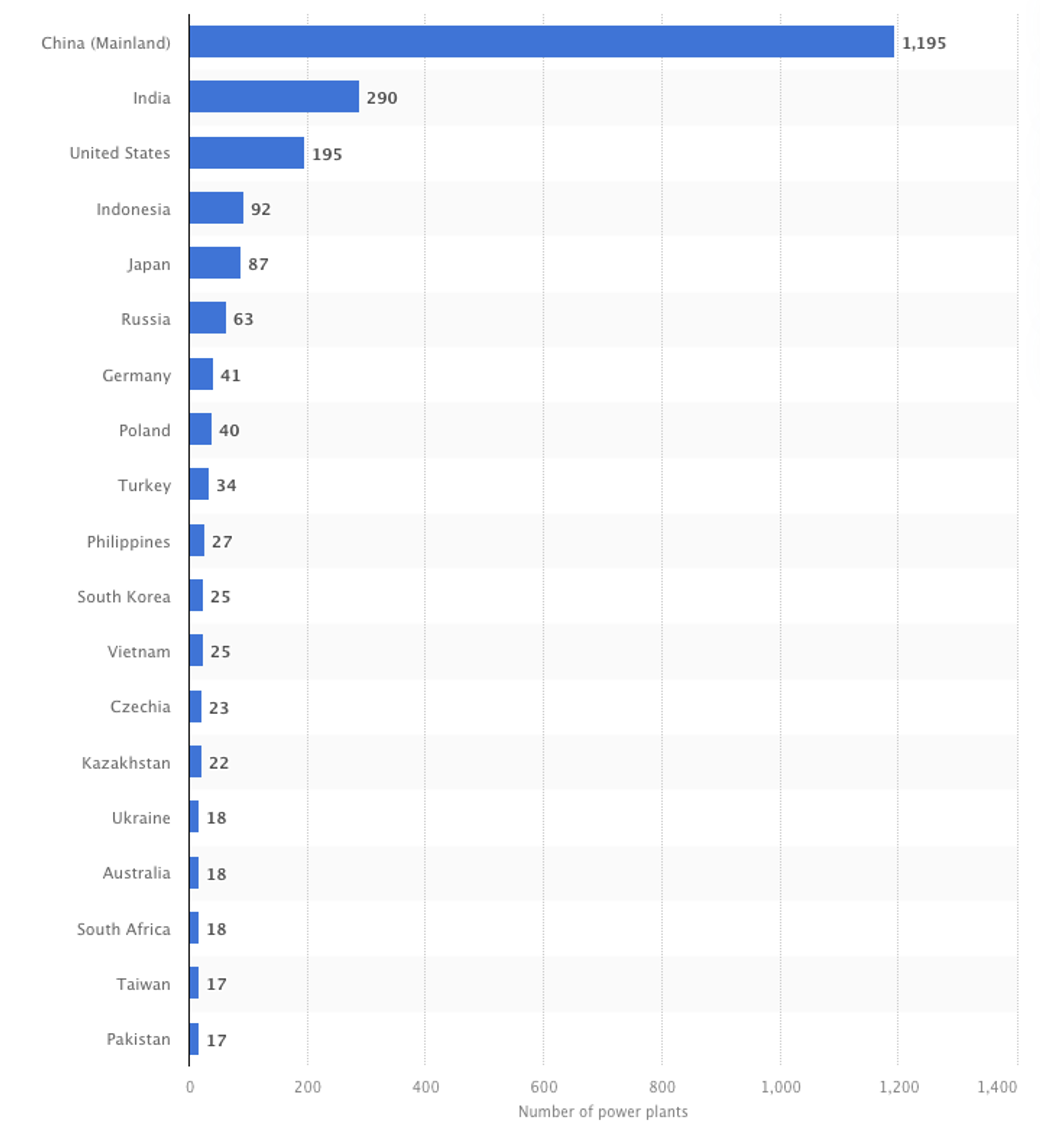
Source: Statista
I could be wrong, but it’s hard to be convinced that a loan scheme to make a maximum of 30,000 financed Hyundai and Kia vehicles, about $1,900 cheaper, will make any difference to global climate change.
There are about 20 million registered vehicles on Australia’s roads, and just more than 72 per cent are petrol, 26 per cent are diesel, and only two per cent are electric, so the scheme will make little if any contribution anytime soon to the emissions by Australia’s vehicle fleet.
And then, just 17-18 per cent of Australia’s emissions come from transport.
Electricity production in Australia is the biggest emission contributor, responsible for 50 per cent of emissions (and Labor’s funding more electric vehicles!), but our coal-fired power plants represent just 0.8 per cent (less than 1 per cent) of the total 19 countries in Figure 1. – and an even smaller percentage of the global total.
So, Labor’s scheme does really seem infinitesimally minute in terms of impact on global climate change. I’m not sure why so much is being made of it.

Roger Montgomery is the Founder and Chairman of Montgomery Investment Management. Roger has over three decades of experience in funds management and related activities, including equities analysis, equity and derivatives strategy, trading and stockbroking. Prior to establishing Montgomery, Roger held positions at Ord Minnett Jardine Fleming, BT (Australia) Limited and Merrill Lynch.
He is also author of best-selling investment guide-book for the stock market, Value.able – how to value the best stocks and buy them for less than they are worth.
Roger appears regularly on television and radio, and in the press, including ABC radio and TV, The Australian and Ausbiz. View upcoming media appearances.
This post was contributed by a representative of Montgomery Investment Management Pty Limited (AFSL No. 354564). The principal purpose of this post is to provide factual information and not provide financial product advice. Additionally, the information provided is not intended to provide any recommendation or opinion about any financial product. Any commentary and statements of opinion however may contain general advice only that is prepared without taking into account your personal objectives, financial circumstances or needs. Because of this, before acting on any of the information provided, you should always consider its appropriateness in light of your personal objectives, financial circumstances and needs and should consider seeking independent advice from a financial advisor if necessary before making any decisions. This post specifically excludes personal advice.


