
The death of iRobot
According to Google, Matt Stoller is a prominent American writer, researcher, and anti-monopoly advocate, known for his work at the American Economic Liberties Project and his popular Substack newsletter, BIG, which focuses on market power, antitrust, and the war against monopolies. He’s a former policy advisor and a key figure in the modern anti-monopoly movement, advocating for breaking up large corporations and promoting competition, drawing support from across the political spectrum.
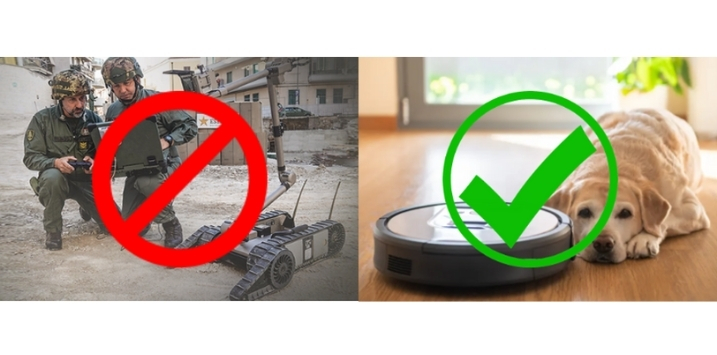
Stoller has written a brilliant piece on the December 2025 bankruptcy of iRobot, today known as the maker of the Roomba vacuum, but once the builder of the PackBot – which helped search the rubble after 9/11 and aided U.S. troops in clearing mines in Iraq and Afghanistan – as well as robotic technology deployed on the Mars rover, in the Fukushima nuclear reactor meltdown, and underwater after the Deepwater Horizon oil spill.
Under a court-supervised restructuring, the company is being sold to its primary manufacturing partner and creditor, the Chinese firm Shenzhen Picea Robotics. With 202 million iRobots in operation, concerns have been raised that private house-related data is being transferred to the Chinese.
Critics have been quick to blame antitrust enforcement under the Biden administration for this outcome, but according to Stoller, a deeper look reveals a decade-long pattern of financial extraction by Wall Street that traded American innovation for short-term gains.
Following the bankruptcy, former iRobot CEO Colin Angle and various Wall Street commentators (including former Obama economist Jason Furman) argued that the collapse was a direct result of the Federal Trade Comission (FTC) and the European Union (EU) blocking Amazon’s 2022 bid to acquire the company. They contend that by preventing the merger, regulators effectively “forced” iRobot into the hands of Chinese owners, creating a national security and consumer privacy nightmare.
Stoller, however, argues that iRobot’s fate was sealed not in 2022, but much earlier, in the mid-2010s. Originally a Defense Advanced Research Projects Agency (DARPA)-funded defence robot innovator, iRobot was forced by activist investors like Red Mountain Capital to abandon its “asset-heavy” and cash-flow-draining research and defence divisions.
The “Asset-Light” strategy investors proposed demanded iRobot stop “wasting” money on research and development (R&D) and instead focus on branding, consumer vacuums and stock buybacks.
By also demanding iRobot move production to China and Malaysia to chase higher margins, investors, perhaps unwittingly, forced iRobot to effectively train its future competitors, allowing those Chinese firms to capture the very technology iRobot had pioneered.
Stoller argues, the proposed US$1.7 billion acquisition by Amazon wasn’t a rescue mission for American robotics; it was a bid for data and network dominance.
Amazon sought to integrate iRobot into its “Sidewalk” network – a proprietary, low-bandwidth Internet Of Things (IoT) backbone – with the true value lying in the mapping data from millions of homes, which would have bolstered Amazon’s surveillance-heavy “Smart Home” ecosystem. According to Stoller, Amazon likely would have kept manufacturing in China, meaning the merger would have done little to preserve American industrial capacity.
Reading the story, one quickly realises that the irony of the sale to a Chinese firm is that it’s being overseen by the very regulators (like Treasury Secretary Scott Bessent) who champion “national security,” which suggests the outcry against antitrust is often a “bad faith” argument used to protect investor payouts rather than the national interest.
I have long argued that capitalism has some very obvious failings. It’s a better model than socialism, but it has serious flaws that require sound regulatory responses. In the iRobot case, it’s reasonable to conclude that Antitrust is one of those vital tools, but it can’t solve the problem of “extractive capitalism” – the optimisation of short term returns. Indeed, as long as capitalism prioritises high returns for financiers over long-term engineering and creation, innovative firms will continue to be stripped of their value, and maybe ultimately sold to those with a longer-term game plan.
Image source: iRobot

Roger Montgomery is the Founder and Chairman of Montgomery Investment Management. Roger has over three decades of experience in funds management and related activities, including equities analysis, equity and derivatives strategy, trading and stockbroking. Prior to establishing Montgomery, Roger held positions at Ord Minnett Jardine Fleming, BT (Australia) Limited and Merrill Lynch.
He is also author of best-selling investment guide-book for the stock market, Value.able – how to value the best stocks and buy them for less than they are worth.
Roger appears regularly on television and radio, and in the press, including ABC radio and TV, The Australian and Ausbiz. View upcoming media appearances.
This post was contributed by a representative of Montgomery Investment Management Pty Limited (AFSL No. 354564). The principal purpose of this post is to provide factual information and not provide financial product advice. Additionally, the information provided is not intended to provide any recommendation or opinion about any financial product. Any commentary and statements of opinion however may contain general advice only that is prepared without taking into account your personal objectives, financial circumstances or needs. Because of this, before acting on any of the information provided, you should always consider its appropriateness in light of your personal objectives, financial circumstances and needs and should consider seeking independent advice from a financial advisor if necessary before making any decisions. This post specifically excludes personal advice.


