
Higher government spending, higher interest rates: what’s next?
The Reserve Bank of Australia (RBA) is stuck between a rock and a hard place. Following four cash rate increases commencing in February 2026, it looks likely that Melbourne Cup Day will see the fifth increase in nine months, potentially taking the cash rate to 4.85 per cent, the highest rate since 2008.
The problem the RBA has is that it is often argued that monetary policy takes around nine months to move the economic needle. So, where will the Australian economy be by the June 2027 Quarter when the fourth and likely fifth RBA cash rate increase has had time to work their way through the economy? Indications are for a tough period ahead.
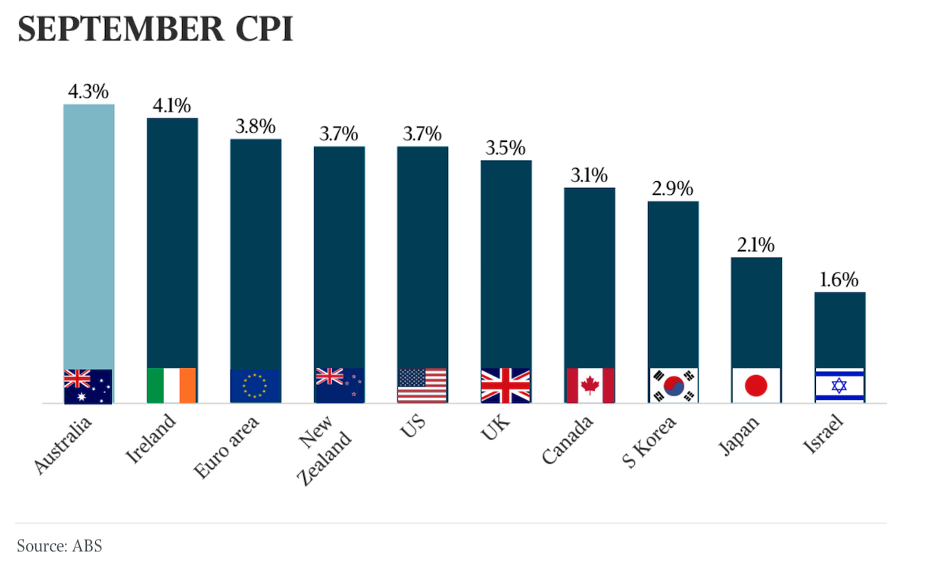
When Australia’s Consumer Price Index figure hit 4.3 per cent for the year to September 2026, “Transport” accounted for 1.0 per cent or 23 per cent of the annual contribution to inflation. Judging by the excuses from Canberra, you’d be led to believe “Transport” accounted for virtually all of the 4.3 per cent increase.
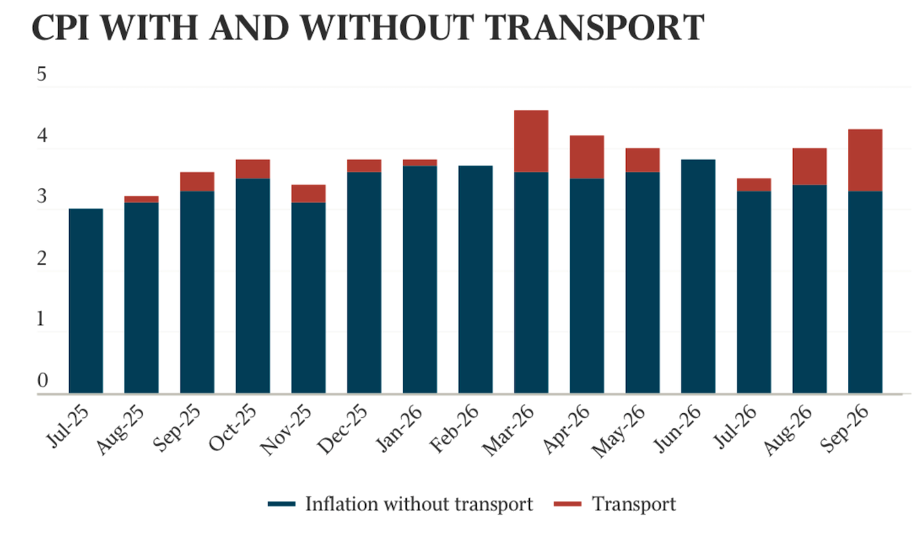
President “it seems like a good idea” Trump must now be regretting his war with Iran given the oil price is testing US$114/ barrel. Look out for the results of the mid term election as the famous political catchphrase “It’s the economy, stupid” will be front, left and centre for the driving public.
Meanwhile, closer to home, instead of running a budget deficit, Treasurer Chalmers has allowed the Australian Government expenditure to move up to around 27 per cent of GDP, the highest level outside the COVID-19 pandemic for many decades and around 4.5 per cent of GDP above the long-term average. Meanwhile, tax to GDP approximates 24 per cent of GDP, another multidecade record. Australia’s longest serving and, many would argue, our most fiscally successful Treasurer, Peter Costello, can’t understand why we haven’t been running a 2 per cent surplus.
To be fair, I would argue that Paul Keating was the Treasurer with the greatest vision. His vision was about growing the pie so all could benefit, rather than simply redistributing it, as the recent Federal Budget appears to have focused on.

Chief Executive Officer of Montgomery Investment Management, David Buckland has over 40 years of industry experience.
David is a deeply knowledgeable and highly experienced financial services executive. Prior to joining Montgomery in 2012, David was CEO and Executive Director of Hunter Hall for 11 years, as well as a Director at JP Morgan in Sydney and London for eight years.
This post was contributed by a representative of Montgomery Investment Management Pty Limited (AFSL No. 354564). The principal purpose of this post is to provide factual information and not provide financial product advice. Additionally, the information provided is not intended to provide any recommendation or opinion about any financial product. Any commentary and statements of opinion however may contain general advice only that is prepared without taking into account your personal objectives, financial circumstances or needs. Because of this, before acting on any of the information provided, you should always consider its appropriateness in light of your personal objectives, financial circumstances and needs and should consider seeking independent advice from a financial advisor if necessary before making any decisions. This post specifically excludes personal advice.


